Why Digital Twin matters now
Most industrial plants already generate useful data through machines, energy meters, PLCs, SCADA systems, maintenance systems, production systems and quality systems.
The problem is that this data is often disconnected across energy, downtime, production, quality and leadership views.
A Digital Twin helps connect isolated signals into an operating intelligence layer so the plant moves from data visibility to operational understanding to earlier action.
The Digi I4.0 view of Digital Twin
At Digi I4.0, Digital Twin is not positioned as a single big-bang transformation. It is a maturity journey.
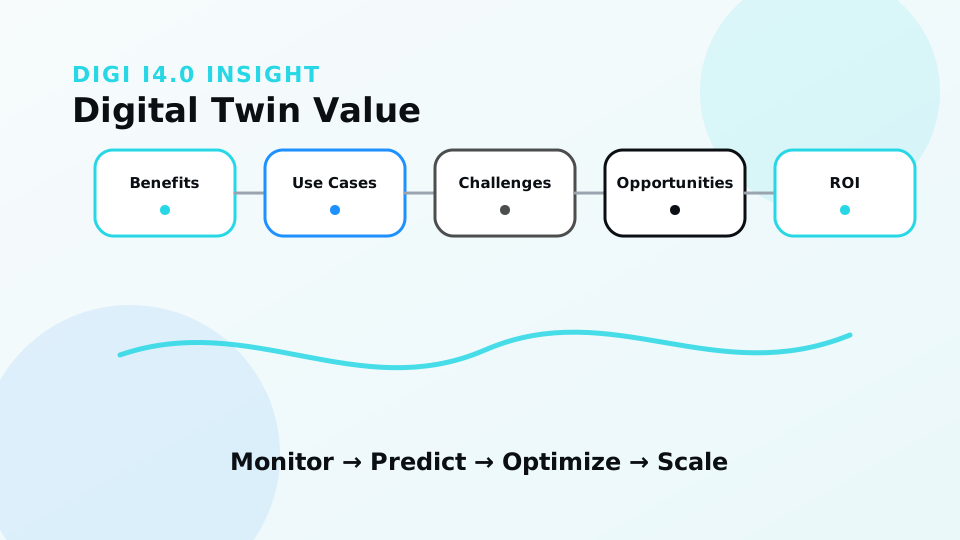
The practical DigiTwin path is Monitor → Predict → Optimize → Scale, supported by the broader journey from EMS monitoring to electrical optimization, EMS prediction, process monitoring, process optimization, predictive control, AI integration and Digital Twin scale.
Start where the plant is. Prove value. Then scale.
Benefits of Digital Twin
Digital Twin can create better visibility of plant operations, earlier detection of abnormal behaviour, predictive maintenance, energy optimization, process optimization, production intelligence, quality improvement, faster decision-making and better ROI from existing systems.
The benefit is not only visibility. The benefit is visibility with context.
A strong Digital Twin does not always require replacing existing systems. Use existing data first and add new sensing only where the decision requires it.
Digital Twin use cases
Common use cases include asset health monitoring, predictive maintenance, energy intelligence, process monitoring, process optimization, production-line intelligence, quality intelligence, predictive control, utility optimization and plant-level operating intelligence.
For predictive maintenance, a twin can connect asset signals with operating context so teams can understand whether a change is related to load, process or deterioration.
For energy intelligence, it can connect consumption with output and operating condition to identify idle load, abnormal baseload, inefficient operation and energy use without productive output.
Challenges of Digital Twin implementation
Common challenges include starting too big, treating Digital Twin as only a dashboard, poor data connectivity, lack of operating context, too much data without decision logic, weak ROI definition, ignoring legacy assets and applying AI before the foundation is ready.
A signal matters only when it changes a decision.
The better question is not how much data can we collect. It is which data is needed to improve this decision.
Opportunities with Digital Twin
Digital Twin creates opportunities to turn existing data into business value, improve energy and sustainability, enable predictive operations, transform maintenance, improve cross-functional decisions, scale practical AI adoption and create competitive advantage.
The strongest opportunity is not the most impressive visual. It is the twin that connects plant behaviour to measurable decisions.
Manufacturers that understand operations earlier can reduce losses, improve consistency, optimize resources and make better capital decisions.
The Digi I4.0 Digital Twin Value Chain
The Digi value chain is: Physical Plant → Assets, Utilities & Processes → Existing Data & Signals → DigiGateway → DigiTwin → Operating Context → Prediction & Optimization → Plant Decision → Measurable ROI.
DigiGateway helps connect existing industrial assets and systems into DigiTwin so the plant can build intelligence without starting from zero.
Digital Twin creates value when plant data becomes context, context becomes intelligence and intelligence changes a decision.
How Digi I4.0 helps
Digi I4.0 helps industrial plants start Digital Twin practically, beginning with a real plant problem rather than a full transformation.
Digi I4.0 supports industrial data connectivity through DigiGateway, plant intelligence through DigiTwin, energy monitoring and optimization, predictive maintenance, process monitoring, production intelligence, quality and computer vision, AI integration and the Digital Twin maturity roadmap.
The goal is to help manufacturers move through Monitor → Predict → Optimize → Scale with measurable value at each stage.
The Digital Twin Value Chain
Digital Twin creates value when plant data becomes context, context becomes intelligence and intelligence changes a decision.
Practical takeaways.
- Digital Twin should begin with one measurable operating problem.
- Use existing systems first and connect only the data that matters.
- Add context before adding AI complexity.
- Define the decision the twin must improve, measure the result and then scale.
DigiGateway + DigiTwin
Connect existing assets and systems, add operating context and build intelligence around measurable plant outcomes.
Explore DigiTwin ↗Begin with one problem
Choose one asset, utility, production line or process area where better intelligence can create measurable value.
Discuss the use case ↗Direct answers.
What are the benefits of Digital Twin?+
Digital Twin benefits include better plant visibility, earlier problem detection, predictive maintenance, energy optimization, process improvement, quality intelligence, faster decision-making and better ROI from existing systems.
What are common Digital Twin use cases?+
Common Digital Twin use cases include asset health monitoring, predictive maintenance, energy optimization, process monitoring, production intelligence, quality improvement, utility optimization, predictive control and plant-level operational intelligence.
What are the challenges of Digital Twin implementation?+
Common challenges include poor data connectivity, lack of operating context, starting too big, unclear ROI, legacy-system integration, too much data without decision logic and treating Digital Twin as only a dashboard.
What opportunities does Digital Twin create?+
Digital Twin creates opportunities for predictive operations, energy savings, maintenance transformation, improved plant performance, scalable AI adoption, better collaboration and measurable operational improvement.
Does Digital Twin require replacing existing systems?+
No. A practical Digital Twin can often begin with existing PLC, SCADA, EMS, MES, ERP, sensors, meters, historians and maintenance data.
How does Digi I4.0 approach Digital Twin?+
Digi I4.0 approaches Digital Twin through a practical journey: monitor, predict, optimize and scale. The focus is on connecting plant data with operating context to create measurable industrial value.
This insight is based on Digi I4.0’s DigiTwin architecture, DigiGateway connectivity layer, DigiTwin Journey maturity framework and operating case-study patterns.